Little Monk Goes Viral

A little child dressed up as a monk in Fuzhou China has gone viral on Weibo

Robot Monk Unveiled In China

A buddhist temple, Dragon Spring Temple in Beijing, China has developed a robot monk named "XianEr" which was unveiled at the temple's National Day Gala celebration earlier this mont

Steven Seagal To Rebuild Buddhist Temple In Serbia

Steven Seagal Wants To Rebuild Europe's First Buddhist Temple

Buddhist Story - The Dog And The Pet Shop Owner

About A Dog And His Master, A Pet Shop Owner

Get Rid Of Bad Luck

Japanese Style

Saturday, August 7, 2010

Temple's Vacancies


Feel like working in a temple ?

Well, a Buddhist temple in Guangdong has vacancies to be filled. Nanhua Buddhist Temple in Shaoquan city is looking for reporters, webmasters and designers.

The temple has been recruiting Buddhist workers with basic Buddhism knowledge to work for its network information department since February this year, according to an official of this department surnamed Pan. They have received eight university students' resumes, he said. The temple has not specified the gender of those it is seeking to hire but they are looking for people who aged between 20 and 30 who hold at least a junior college diploma and have a minimum of one year relevant work experience.

The recruitment aims at developing the culture of Buddhism and building a platform for Buddhism study, said Pan, adding that workers in the temple don't have to behave like monks and they can eat meat if they want but they should respect the monastic life of the monks there.


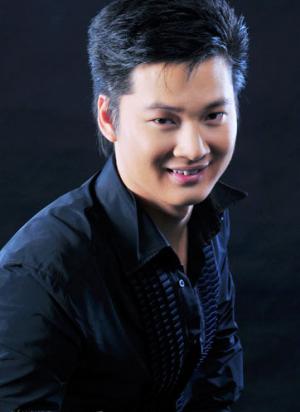
Buddhist Personality : Duc Tuan

Name : Duc Tuan
Nationality : Vietnam
Profession : Singer


Friday, August 6, 2010

In Search Of The Buddha

Rio Helmi is an Indonesian photographer from Ubud, Bali. All his photos reflect two major passions of his life , photography and Buddhism. An exhibition of his photos titled "In Search Of The Buddha" is currently being held in Ubud and will run until this September.

( A monk walks into the sunset in a monastery in Chiang Mai )

“There is no one story behind this exhibition, there is no one story behind each one of these images. A multiplicity of causes and conditions have come together for the collection. They are ongoing. Each one of these images has arisen under its own particular circumstance with its own set of causes. People may think this sentence sounds like its from a Buddhist text, not a photographic book" he said.

( Long road: A young boy on a trip to a Nadam festival, a semi-religious cultural fair in Mongolia, stands by a cairn commonly found in Central Asia where pilgrims leave votives in the form of stones at the top of passes )


The seeds of photography as well as Buddhism were planted early on in his childhood. Born in Europe in 1954 to an Indonesian diplomat father and a Turkish mother, Rio’s childhood and youth were spent living in the various countries where his father was posted as well as visiting many countries in Europe and Asia . At the age of 12 he was introduced to the darkroom by a family friend — the very first pictures he developed were of newly arrived Tibetan refugees in Switzerland.

( Deep eyes: A young Tibetan novice under a huge tent awaits the start of the Dalai Lama’s annual teachings in Bodghaya )


“My father’s fascination for photography and home movies pervaded our family life. There was also a dream-like childhood visit to magical Borobudur in the early 60s that sticks in my mind. As does my first encounter with a darkroom where the first pictures I developed were of Tibetan refugees. ‘Who are these people?’ I thought — I was completely fascinated. There was also an unforeseen meeting with His Holiness the Dalai Lama in 1982,” he said.

( Near finish: A Tibetan woman in Dharamsala takes time out from turning a giant prayer wheel to offer some heartfelt prayers )


There are more than 25 images displayed in the exhibit and each speaks of different conditions, different expectations faced by Buddhist followers, monks and laymen alike, throughout Asia, from Dharamsala in India to Glodok in Jakarta. Yet, they speak about Rio’s personal journey, about specific things and moments that moved his heart and deepened his understanding on the teachings of Siddartha Gautama.

Rio has reached the point where techniques and aesthetics moved to the backseat and the ability to surrender to the moment took the steering wheel. He repeatedly said that he didn’t even care about that these elements anymore, underlining both his freedom from his “old” self as well as his concern for the prevailing trend among contemporary photographers to bicker more about the length of the lenses and about what the best techniques are.

Despite that statement, his images display all the characteristics of well-executed techniques and a deep understanding of aesthetics.

( Photos taken on the opening day of the exhibition. Rio is the bald guy )


Thursday, August 5, 2010

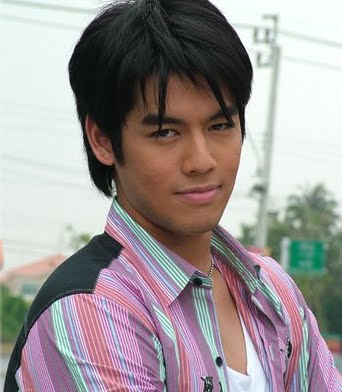
Buddhist Personality : Watcharaboon Lesuwan

Name : Watcharaboon Lesuwan
Nationality : Thailand
Date Of Birth : 13th October 1981
Height : 181cm
Profession : Actor


Early last month, he had the opportunity to don a monk's robe for a drama shooting. He said that initially he did not feel anything about being a monk but after donning the yellow monk's robe, he felt the humility of monkhood and the urge to become one in real life. After the filming was completed, he said that he would definitely be ordained ( for a short term ) in the future but at the moment the time was not right yet.


Buddhist Parable : An Empty Cup

Once there was a university professor who had an extensive background in Zen and Buddhism went to visit with a Zen master to discuss and learn things of a Zen nature from the master.


While they talked, it became clear to the Zen master that the professor considered himself quite knowledgeable on the subject of Zen and Buddhism, going on and on about various related topics. The Zen master listened, and then offered tea. He went to fetch the tea pot and cups and set one before the professor.

The Zen master began pouring tea while the professor continued talking, but when the cup became full to the brim, the Zen master continued pouring. Tea spilled over the edge and all over the table!

"Stop, what are you doing?!" the professor spoke, interrupting himself. "Can't you see that the cup is full?"

"You are like this cup," the Zen master explained. "You are so full of information that nothing more gets in. You came here to discuss Zen, but how can I show you what is Zen if you do not first empty your up?"

The professor thought for a moment and became silent, ready then to receive lessons from the Zen master.

Moral of the story is, we should not be too enamored and trapped by our own ideas and opinions until we disallow new ones to get into us.

Tuesday, August 3, 2010

6th Living Buddha Enthroned

The sixth Living Buddha Dezhub is enthroned in China's Tibet Autonomous Region yesterday. The ceremony took place at Zagor Monastery in Shannan Prefecture, about a month after he was selected to be the reincarnation of the fifth Living Buddha Dezhub who died in 2000.

At the inaugural ceremony that began at 9:30 a.m., Losang Jigme, Tibet's top official in charge of religious affairs, read out the regional government's approval of the enthronement.

As hundreds of monks chanted sutra to pray for peace and happiness, the crimson-robed Living Buddha paid his respects to Buddha statues at the monastery before he was seated on the throne.

The solemn-looking 5-year-old sat straight when he was adorned with a yellow cassock and yellow hat, the symbols of the Gelugpa school, also known as the Yellow Sect, one of the four streams of Tibetan Buddhism.

His smile, however, betrayed his age from time to time.

"His enthronement is a glorious day for the monastery, as well as for all Buddhist monks and the faithful," said Losang Gyaltsen, a monk at Zagor Monastery in Shannan.

The young Living Buddha, whose secular name is Losang Doje, was born in Shannan on Nov. 30, 2005.

He was chosen as a candidates after years of searching by senior monks according to religious practice and traditions. He was selected as the reincarnation and was tonsured by Bainqen Erdini Qoigyijabu, the 11th Panchen Lama, in Lhasa on July 4.

The Panchen Lama also gave him the religious name Dezhub Jamyang Sherab Palden.


Monday, August 2, 2010

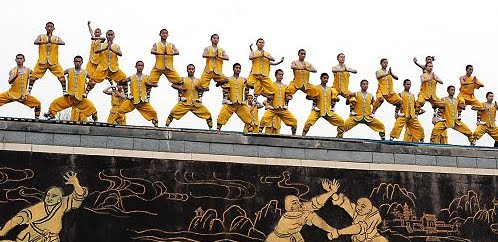
Shaolin Temple Recognized As World Cultural Heritage

The home of Chinese kungfu and Zen Buddhism, China's Shaolin Temple is now part of humanity's cultural heritage.

Nestled in the Mount Songshan of Central China's Henan province, the historic architectural complex including the Shaolin Temple was added on August 1, 2010 to the UNESCO World Heritage List during a meeting of the World Heritage Committee in Brasilia, Brazil.

The new addition pushed China's world heritage sites to 39, including 28 cultural heritage sites, seven natural heritage sites and four cultural and natural heritage sites.

UNESCO said the historical architecture complex stands out for its great aesthetic beauty and its profound cultural connotations.

The complex is composed of 11 traditional structures, including the Shaolin Temple, the Observatory, Songyang Academy, Taishi Towers and Zhongyue Temple.


With a history of more than 2,000 years, these monuments feature various architectural styles brimming with ancient Chinese culture.

They provide the world with a glimpse into ancient Chinese religion, philosophy, customs and scientific development, said Yang Huancheng, an expert of ancient architecture.

Shaolin Temple's abbot Shi Yongxin said the UNESCO decision is a privilege, but it also adds pressure.

"For the monks, living in a world-recognized heritage site is a wonderful experience, but at the same time, our responsibility to protect the temple becomes even graver," he said.

Shi, however, said admission prices will not rise, and the temple would try to provide better service for domestic and foreign visitors.

Shi said a higher profile for the Shaolin Temple will heighten the public's awareness to protect the temple.

"I'm also looking forward to the addition of Shaolin kungfu into UNESCO's intangible heritage list," Shi added.

Local officials said they are getting prepared for more tourists from home and abroad.

"We've begun to organize tour guides learning to give introductions in English about the world heritage site, considering the increasing number of foreign visitors," Zhu Jianping, a senior official of Dengfeng tourist bureau, told China Daily on Sunday.

Zeng Jianshu, a local resident, said as more tourists come, his business will undoubtedly benefit, too.

Though many people hailed the news, there were also frowns with some expressing doubts about the benefits to the area.

One netizen surnamed Mu said the arrival of more tourists might lead to an over-commercialization of the site.

"Too many tourists will destroy the tranquility and the sublime beauty of the religious constructions," Mu said.